The Yellow Jessamine Garden Club meeting was held at Red Cardinal Coffee & Shakes in Dillon on January 6th. Vice-President, Terry Hayes, brought our meeting to order.
Participation in roll call involved naming cardinal facts. After a short devotion and prayer, members were invited to place an order at the counter. The Red Cardinal, which is located on Main Street in Dillon, o ers a variety of delicious sandwiches and goodies, as well as a variety of chips, drinks, shakes, and coffees. After the delicious food was enjoyed, YJGC members recited the Pledge to the Garden Club of SC and the Creed. Minutes from our last meeting were read and approved, and new reports were given. Mrs. Terry Hayes then presented a wonderful program on Cardinals.
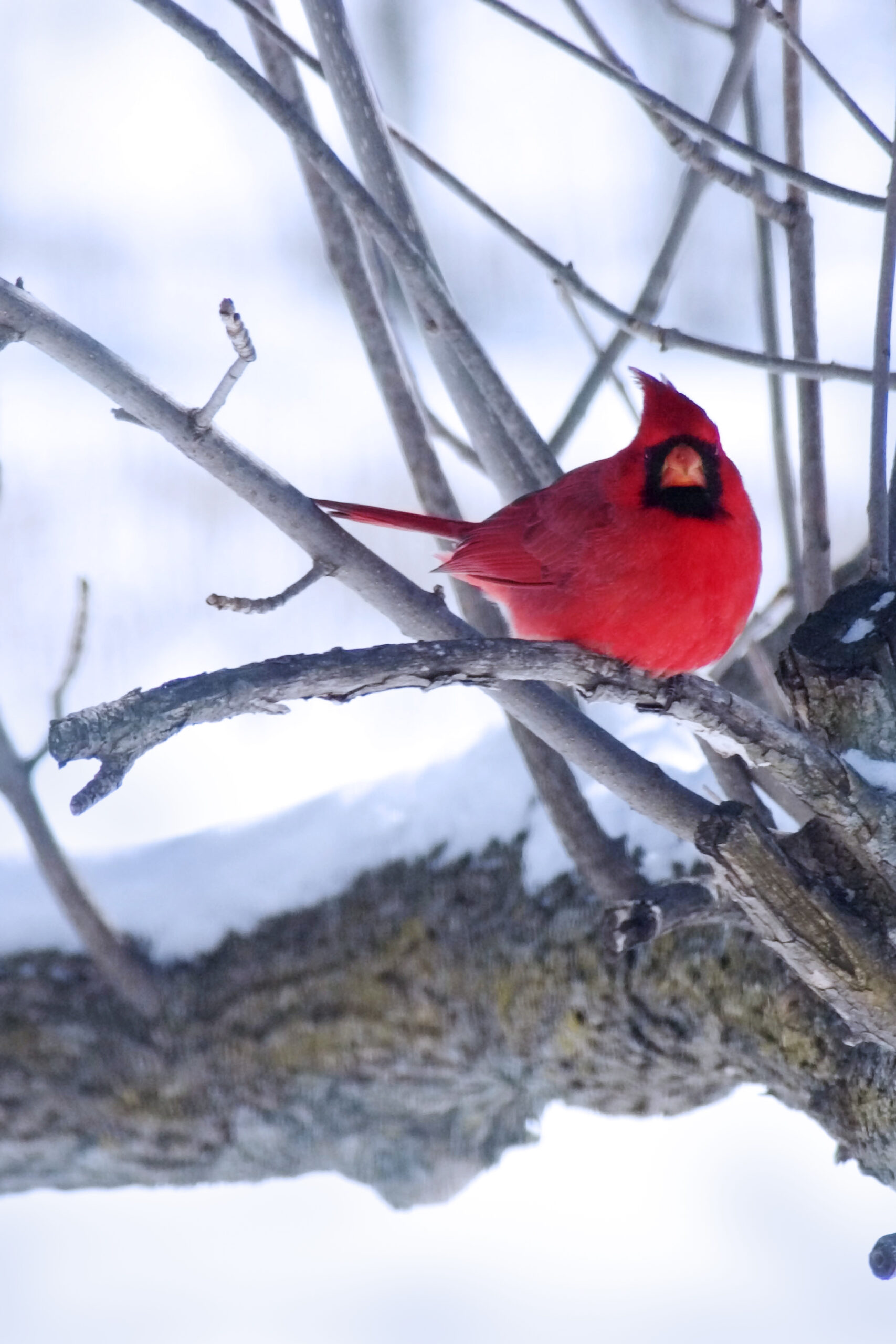
Cardinals are beautiful, red-feathered birds that are one of the most beloved birds in America. These bright little birds only live in the eastern United States, so people living west of the Rocky Mountains won’t have the pleasure of seeing them. Cardinals are found in both North and South America. The males are red, while the females are brown with red accents. They do not migrate, which means they stay in the same place year-round. Cardinals are named after the red robes worn by Catholic Cardinals. Cardinals, both males and females, are known for their cheerful songs. They have distinctive songs, which is how they communicate. For instance, cardinals establish their territory, attract mates, or alert others to potential threats through songs, chirps, and calls. There have been over twenty-four di erent songs noted by researchers.
These lovely songbirds feed on insects, berries, grains and seeds (mainly safflower and sunflower). Their beak is especially designed for cracking seeds, which is a staple in their diet. They also have sturdy robust bodies, a large head, a long tail, and an incredibly strong beak. The body length of a cardinal runs from 8.3 to 9.1 inches, and the wingspan can range anywhere from 9.8 to about 12.2 inches. They have short, rounded wings that aid in navigating trees and bushes. Their wings are not designed for long distance flights, which consequently helps them excel in quick, short flights to evade predators.
Cardinals mate for life and have a courtship ritual that involves the male feeding the female seeds beak to beak. Females lay three or four eggs at a time and can have up to four broods (sets) of chicks per year. The eggs are incubated for approximately two weeks.
Nests are usually built by the female, however, both parents participate in the o spring’s upbringing of scavenging for food and teaching them to fly.
The average life span of a cardinal is about three years due to all of the hazards they face. These hazards include predators, disease, accidents, and starvation. Cardinals are heavily threatened by habitat loss, pollution, and climate change. It is recommended that to deter these threats, we plant native vegetation, create bird friendly environments, and enhance public awareness of the importance of birds to our ecosystem.
There are seven states who have the cardinal as their state bird. These states are Illinois, Indiana, North Carolina, Kentucky, Ohio, West Virginia, and Virginia.
Before the close of the meeting, Mrs. Hayes also provided information on our flower of the month. She named the Carnation as our January flower. Carnations, otherwise known, as Dianthus caryophyllus, were first grown by Greeks and Romans and have been cultivated for over 2,000 years. They symbolize love, fascination, and distinction.
Carnations come in a variety of colors such as red, white, pink, yellow, and purple and play significant roles in cultural and traditional practices around the world. The carnation is the state flower for Ohio, which was chosen to honor President William McKinley. Carnation petals are edible and are used to garnish salads, desserts, and beverages. They have also been used for medicinal purposes throughout history to treat fever, stomach aches, and inflammation. January 29th is celebrated as Carnation Day. Our meeting was concluded after business was discussed and lessons were presented. The Yellow Jessamine Garden Club of Dillon is a member of the National Garden Clubs, Inc., South Atlantic Region of National Garden Clubs, Inc., The Garden Club of South Carolina, Inc., and Coastal District of the Garden Club of South Carolina, Inc.
Yellow Jessamine Garden Club Learns About Cardinals