By Cork Hutson
Long before she became a beloved companion at Highland House, our home in rural Upstate South Carolina, a small, buff and ginger-coated puppy named Willow began life in conditions that echo an older, wilder story — one rooted deep in the natural history of the American Southeast.
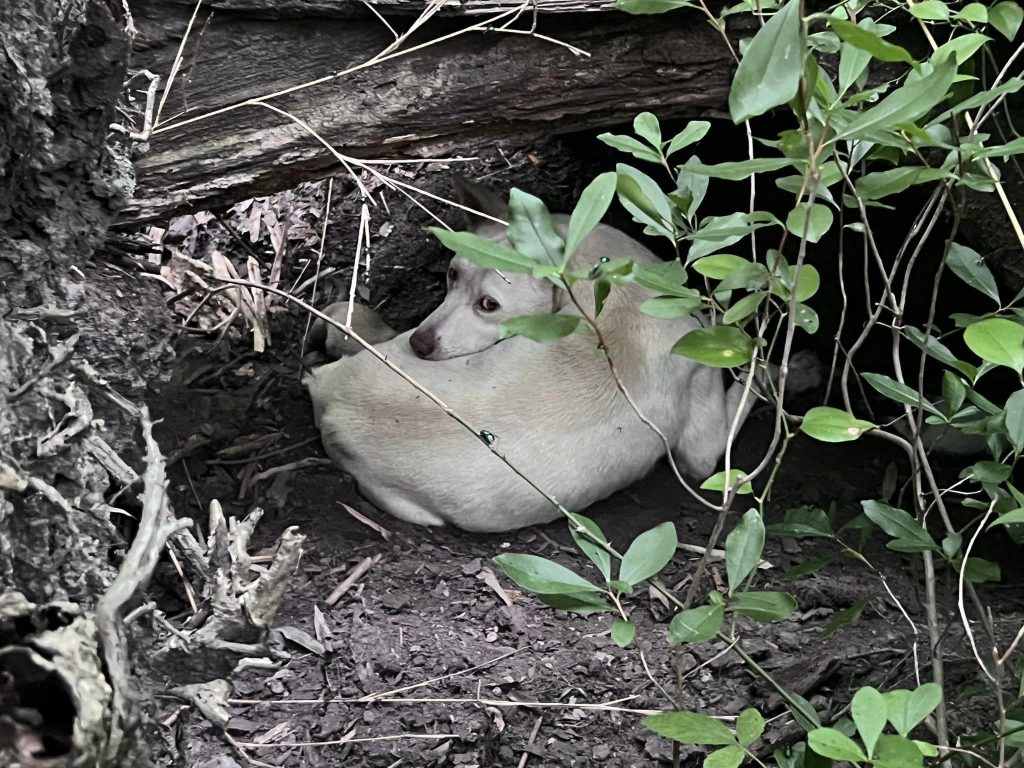
Willow was born beneath an uprooted tree, in a den formed into a muddy swamp bog near Latta, South Carolina. The setting — humid, insect-laden, and unforgiving — was not unusual for her kind. For generations, free-ranging Carolina Dogs have sought out such sheltered, hidden spaces to give birth and raise their young, relying on instinct honed over centuries.
At just three days old, in an almost providential turn of events, Willow and her littermates were discovered alongside their mother, who was malnourished but fiercely protective. The mother dog’s willingness to approach humans — despite a lineage shaped by caution and independence — likely saved the lives of her pups. One of the rescuers recalled it simply: she was starving, but she chose to trust. That decision changed everything for those puppies.
Among the litter, one of Willow’s sisters — later named Okee, short for Cherokee — was in particularly dire condition, suffering from severe infected sores near the base of her tail. For a time, her survival was uncertain. With treatment and attentive care, she recovered and has since been adopted into a home of her own.
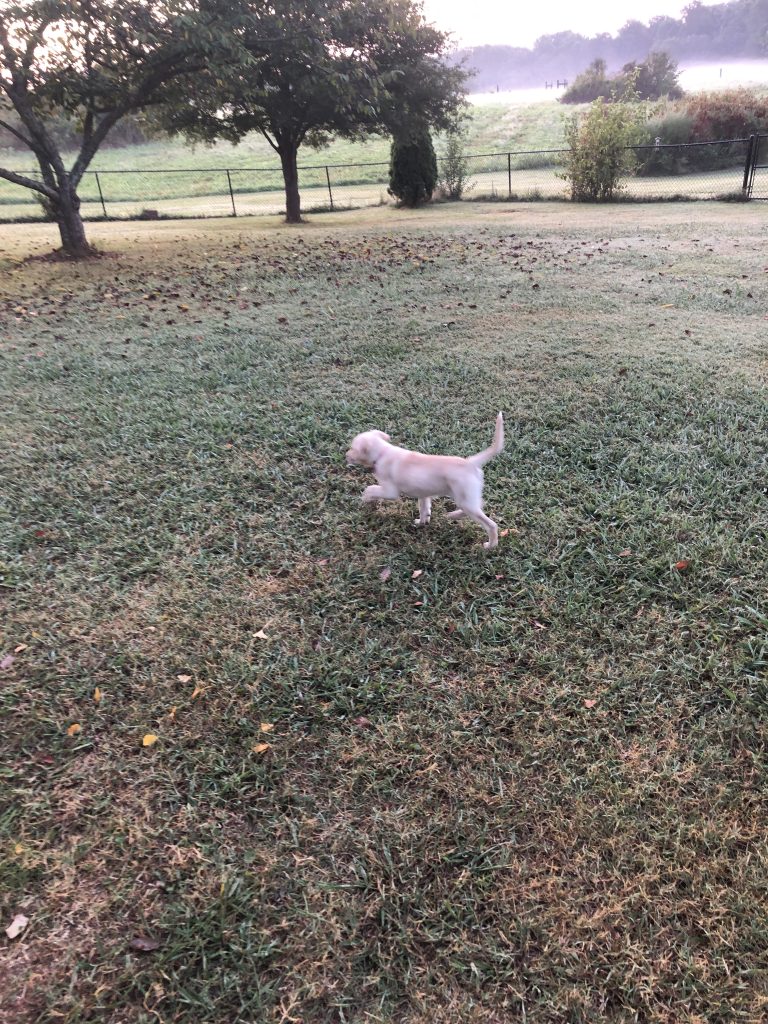
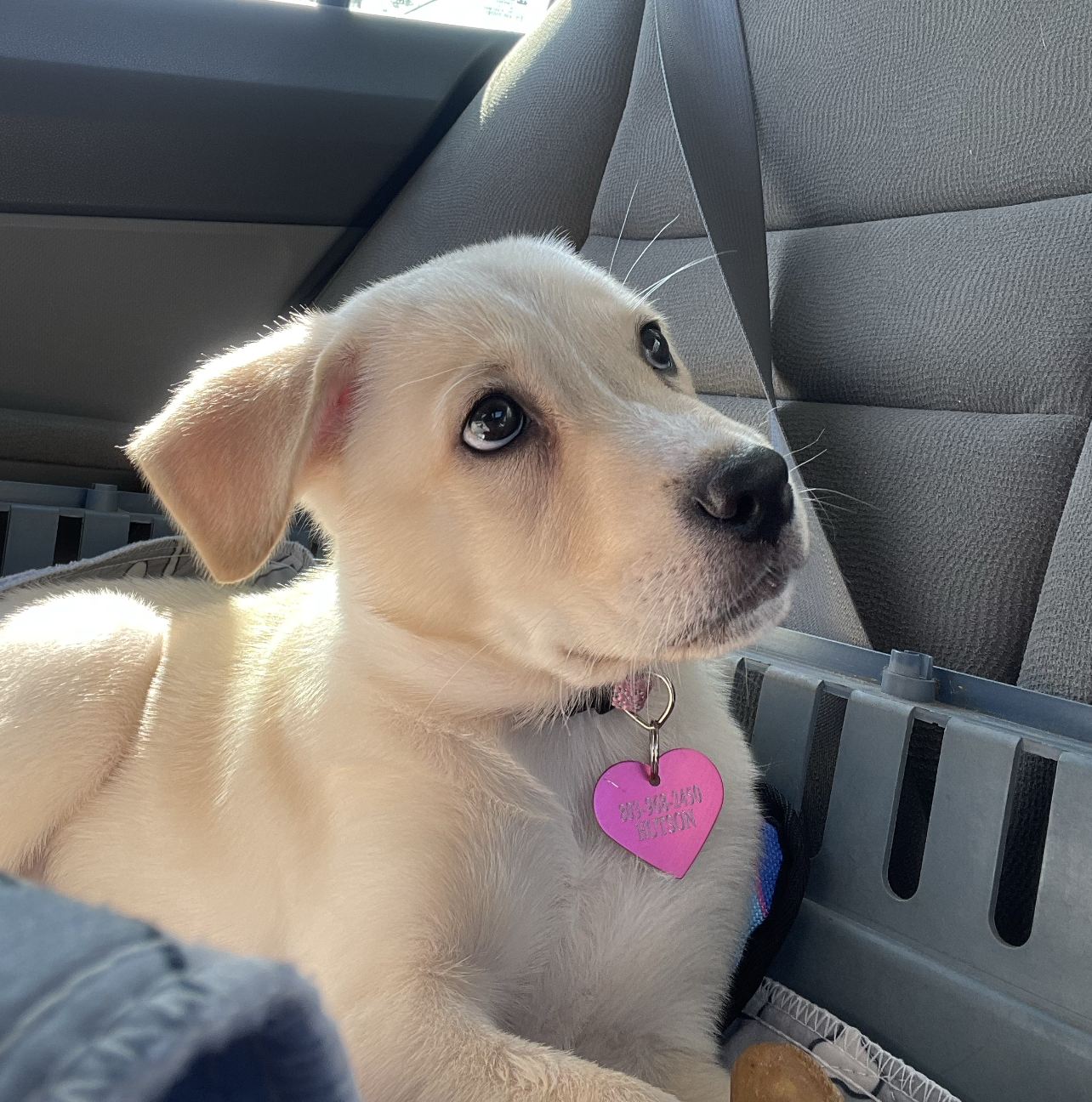
Willow joined our family at approximately eight weeks of age. From the beginning, she displayed traits closely associated with the Carolina Dog — a free-ranging landrace breed of the Southeast U.S. sometimes called the “American Dingo.” Only formally recognized in recent decades, the breed is believed to descend from ancient dog populations that crossed into North America alongside early human migrations thousands of years ago. In the late 20th century, biologist I. Lehr Brisbin Jr. brought wider attention to these dogs through field research in South Carolina, documenting their distinctive traits in remote, free-ranging populations.
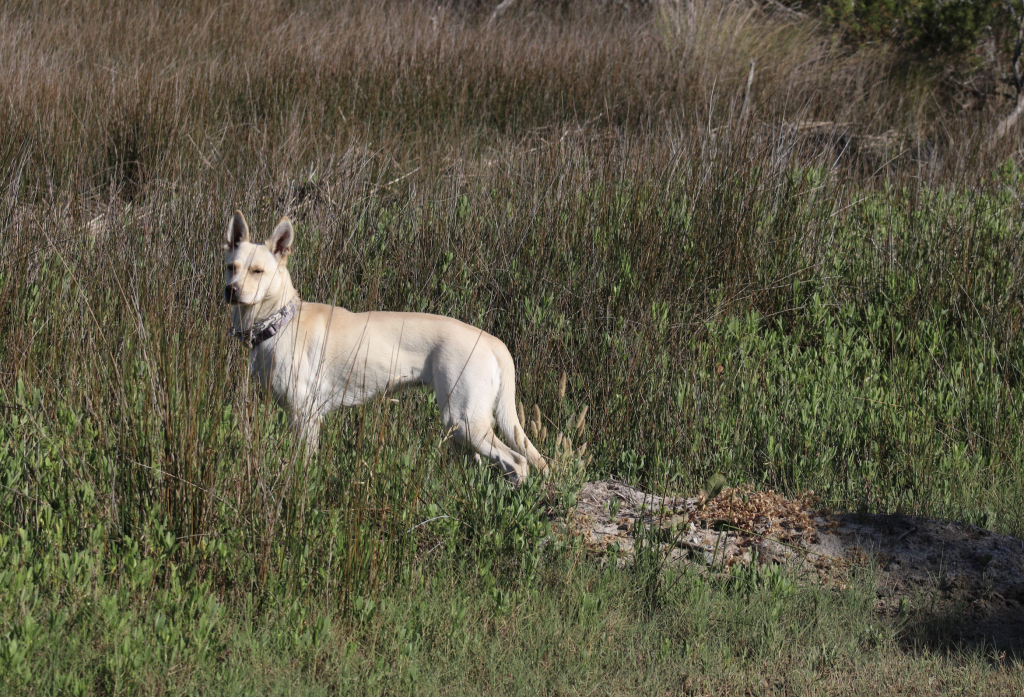
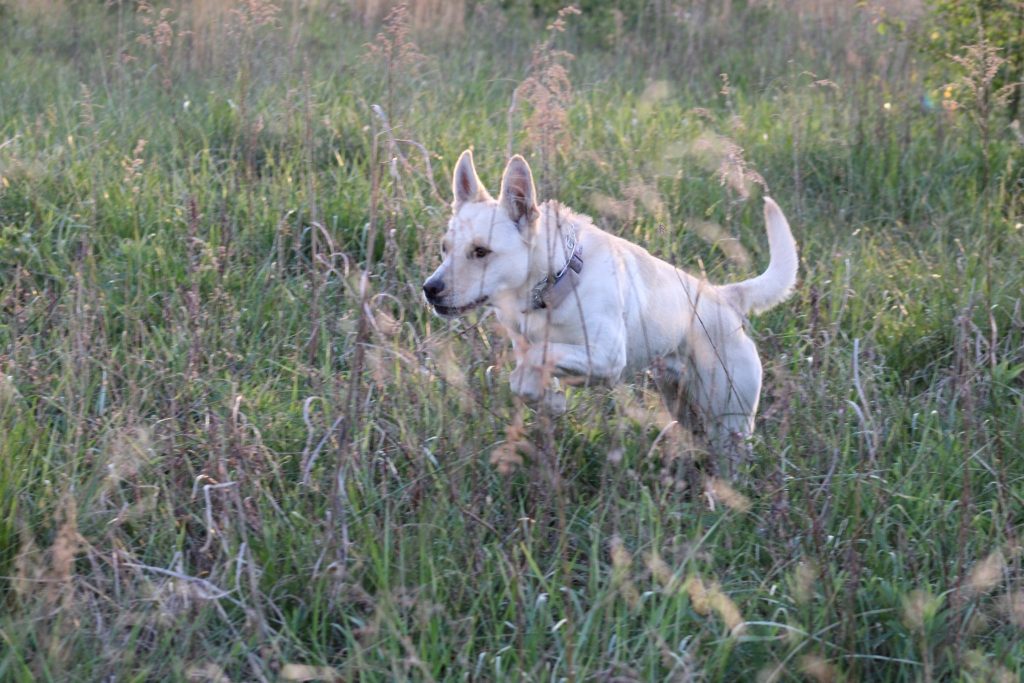
Today, Willow reflects that heritage in unmistakable ways. Her ears are upright and highly mobile — sensitive instruments for detecting distant sounds. Her eyes are almond-shaped, alert, and expressive. Her body is lean and athletic, built for endurance, and her tail carries the subtle curve — sometimes described as a “fishhook” — often noted in the breed. Behaviorally, she is cautious with strangers but forms deep, loyal bonds within her household. Her instincts for exploration, observation, and environmental awareness remain evident in daily life.
Experts often point to three key indicators when identifying Carolina Dogs: phenotype, behavior, and ecological origin. In Willow’s case, all three converge. Her birthplace in a natural swamp den, her free-ranging origins, and her characteristic traits together present a compelling portrait of a dog whose roots run deep in this landscape.
Yet beyond lineage or classification, Willow’s story is one of survival and connection. Her mother and one sibling remain with the rescuers who first intervened. Her other siblings, including Cherokee, have found homes of their own. And Willow, now fully woven into the fabric of our family, continues to embody a living link to a much older story — one that stretches back thousands of years, yet still unfolds in the present day.
For those who follow her story, she is more than a pet. She is a reminder that even in the most unlikely places, life endures — and sometimes, finds its way home.
*
Cork Hutson is a retired U.S. Navy veteran. His articles, essays, and stories, drawn from decades of life experience, appear on Substack at Life UnCorked and The Talking Pen. Cork and his wife, Susan, live in the Upstate region of South Carolina with their two dogs, Willow and Beau.
PHOTO GALLERY