By Betsy Finklea
The Dillon County Clemson University Cooperative Extension Service held a Growing Good Health Class on growing peppers recently
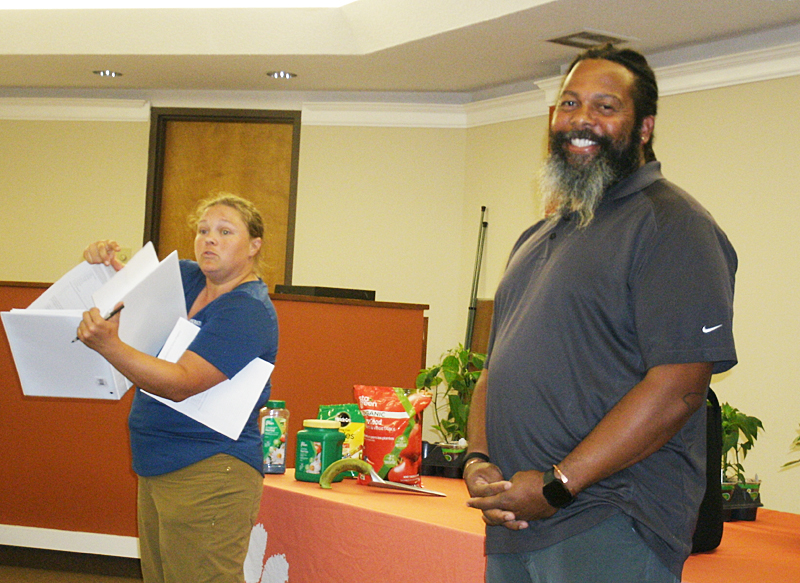
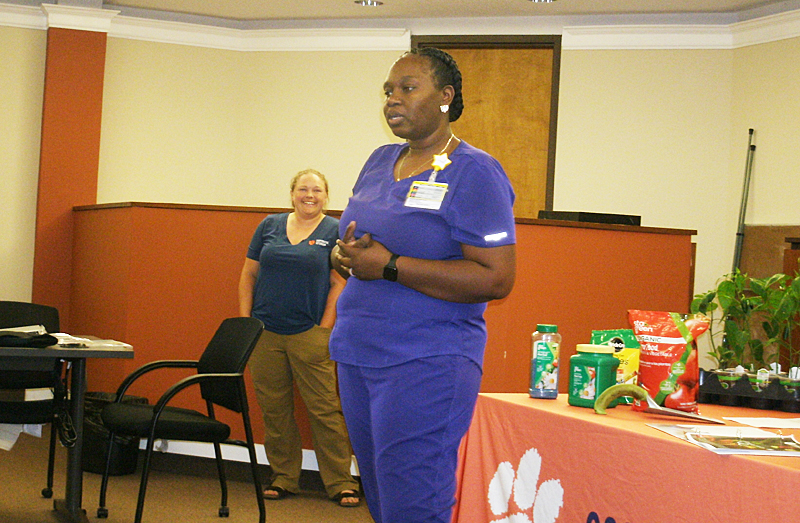
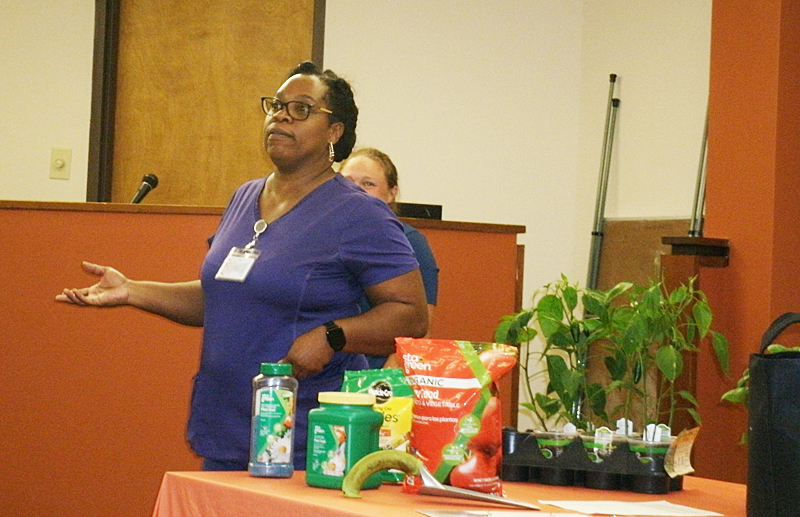
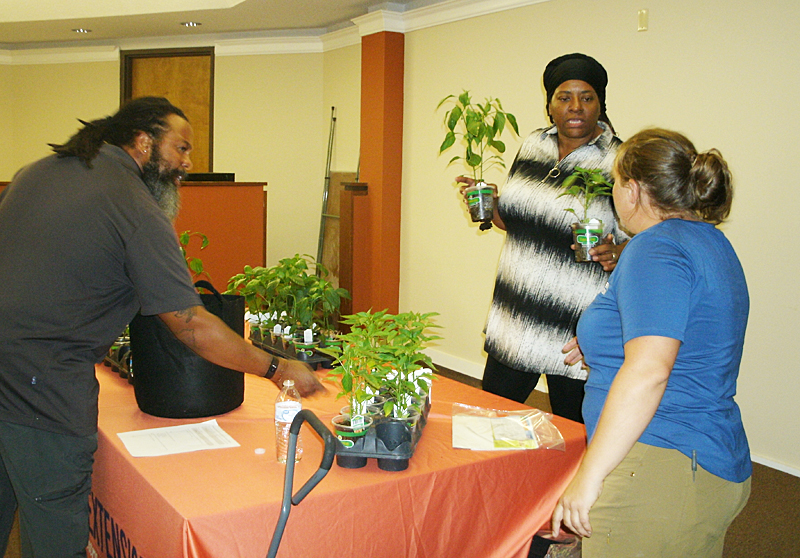
The session was led by Carmen Ketron and Justin Foxworth.
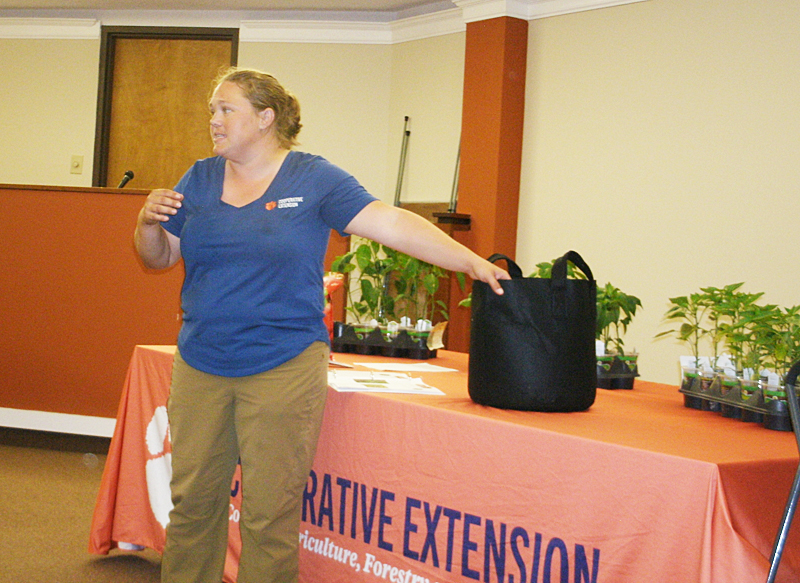
Ketron kicked things off with a tutorial on growing peppers. Peppers love hot weather and don’t like a lot of water, Ketron said. She said to let the peppers dry out in the container between watering and even suggested letting them look a little wilted before watering. She said to then do a deep watering and wait two or three days before watering again.
Peppers are related to tomatoes, eggplant, and potatoes, and peppers are susceptible to the same diseases. Peppers are hard to start from seeds. To harvest pepper seeds, gardeners need to let the pepper die on the vine, decompose, and let the seeds turn dark brown before they can germinate.
There are various types of peppers including bell peppers, cayenne peppers, banana peppers, jalapeno peppers, habanero peppers, and others such as Carolina Reapers, Ghost Peppers, Scotch Bonnet, Poblano, and Serrano.
Hot peppers include cayenne, Charleston hots, jalapenos, ghost peppers, and Carolina Reapers.
Sweet peppers include bell peppers and mini bell peppers.
Banana peppers are semi-sweet.
Very often, peppers will self-pollinate, Ketron said.
Planting time for peppers is generally in April through about May 15th. Another round of pepper planting can be done in July-August. Peppers don’t like any kind of cold snap, and they like a little bit of fertilizer.
For container planting, Ketron suggests using potting soil because it is sterile and to keep fertilizing on a regular basis throughout the growing season.
She discussed the various pests that can affect peppers such as thrips, aphids, corn earworm, root knot nematodes, army worms, and European Corn Borers. She said caterpillars also like peppers. She suggested that if you grow gardenias to plant your peppers in some other location because thrips like gardenias.
Ketron said peppers are “pretty easy” to grow. To harvest them, snap them off the plant. She said if you have squirrels, you can snap them two days early and put them by apples which will help them ripen faster. She said when they start to wrinkle they are beyond ripe.
Ketron also suggested in times where a hurricane or big storm is coming to clean everything off the vines and let them ripen inside.
After Ketron’s presentation, Foxworth took over. He spoke about moving more and sitting less. He said working in the garden can help. He said people should consult with their healthcare provider to see what they should be doing and what their level of activity should be. He described the various levels. He said a low level is when you can garden and talk and sing at the same time. A moderate level is when you can garden, talk, but can’t sing. A vigorous level is when you can’t sing or talk. He suggested getting 150 minutes of physical activity a week.
A bigger plate is not a good thing. My Plate uses a 9-inch plate. A man should eat 2-4 cups of vegetables per day and a woman should eat 2.5-3 cups of vegetables per day. One large bell pepper equals one My Plate cup. Peppers can be stored for up to 7 days in an airtight container. He also suggested using alternative seasonings like Accent instead of salt. “Little steps can make a big impact,” Foxworth said.
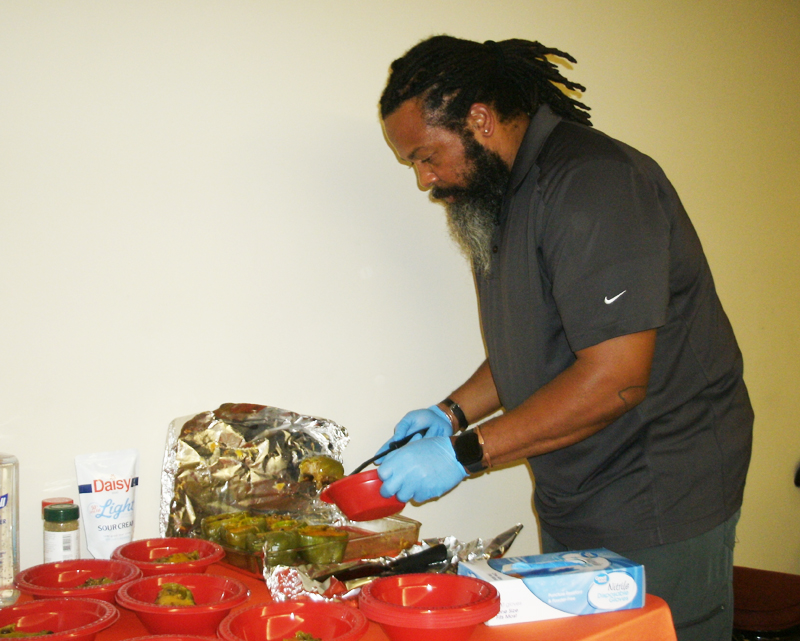
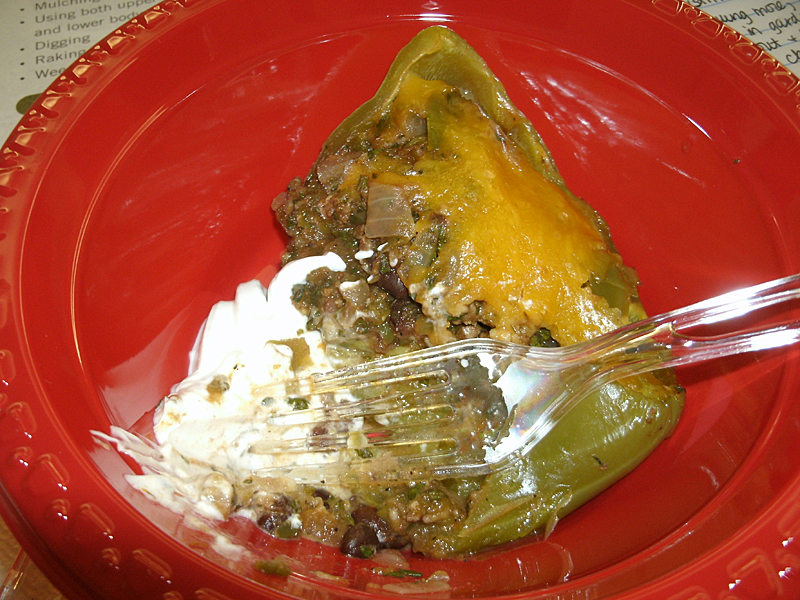
After the presentation, everyone had the opportunity to enjoy delicious Stuffed Bell Peppers prepared by Foxworth.
Participants received free pepper plants, a grow bag, information, and other items. CareSouth Carolina was on hand to do blood pressure checks as well.
PHOTO GALLERY
Photos by Betsy Finklea/The Dillon County News, LLC