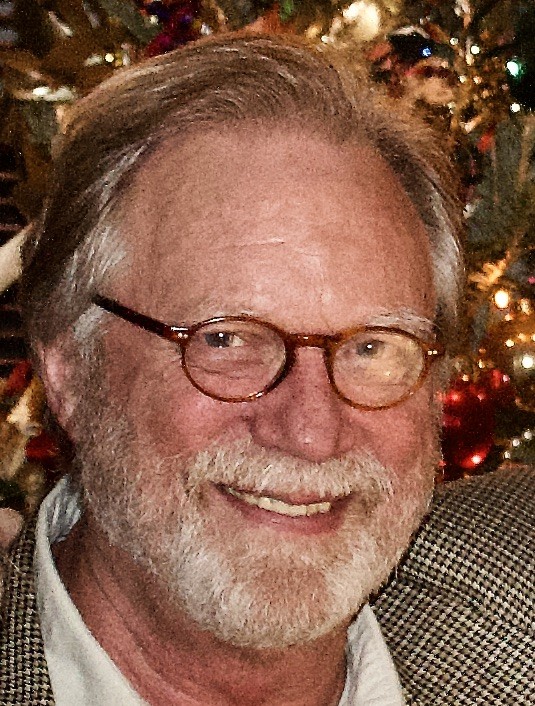
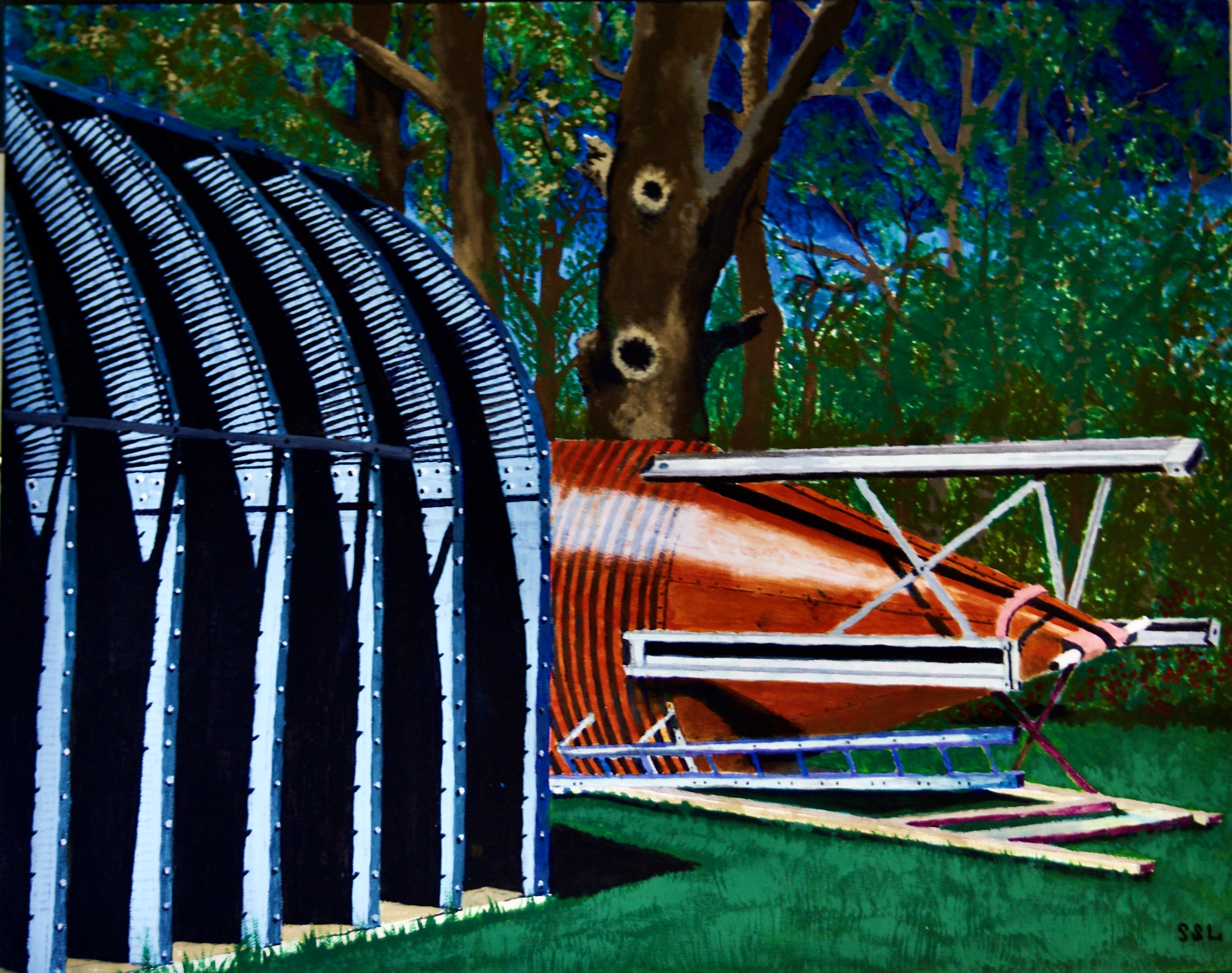
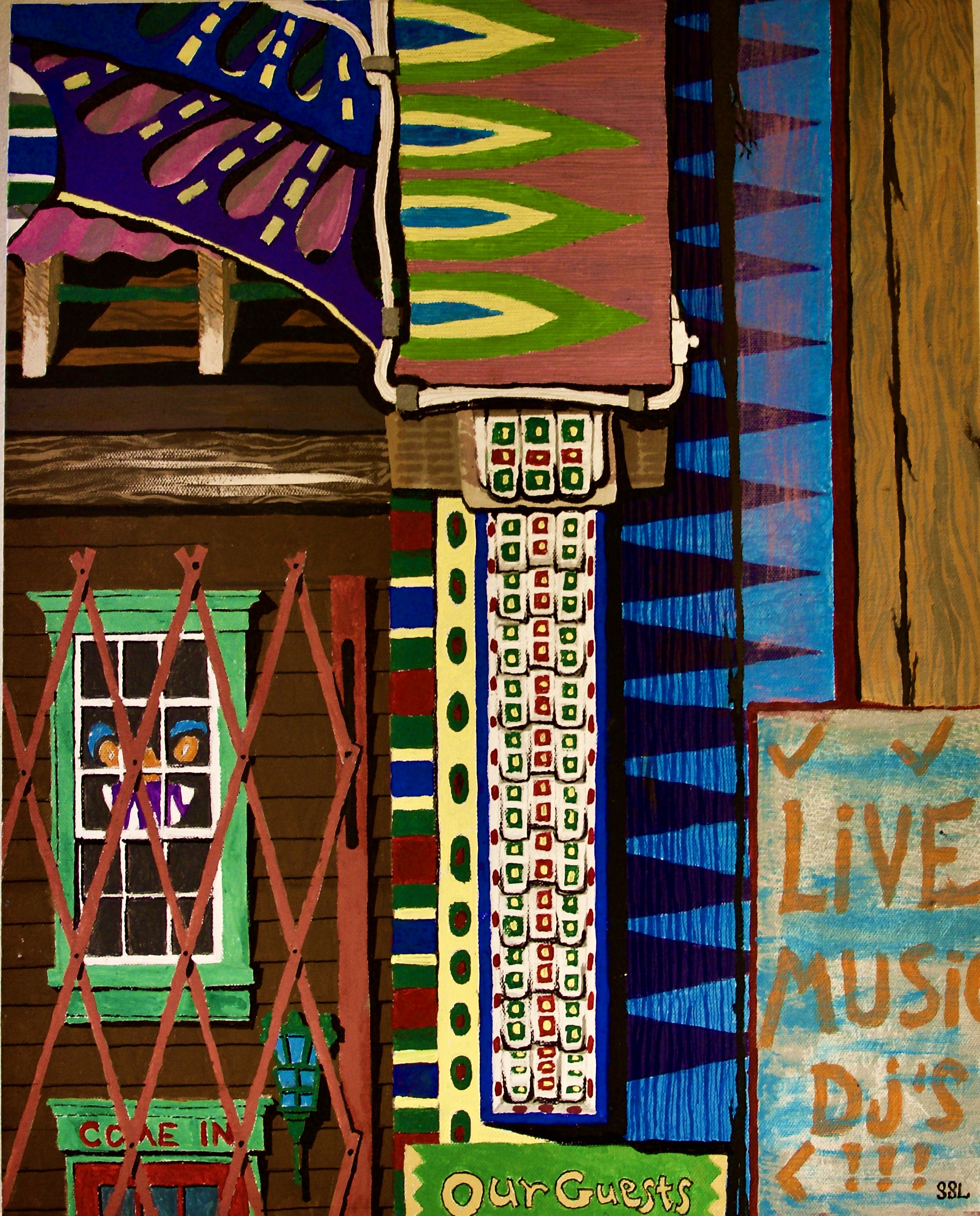
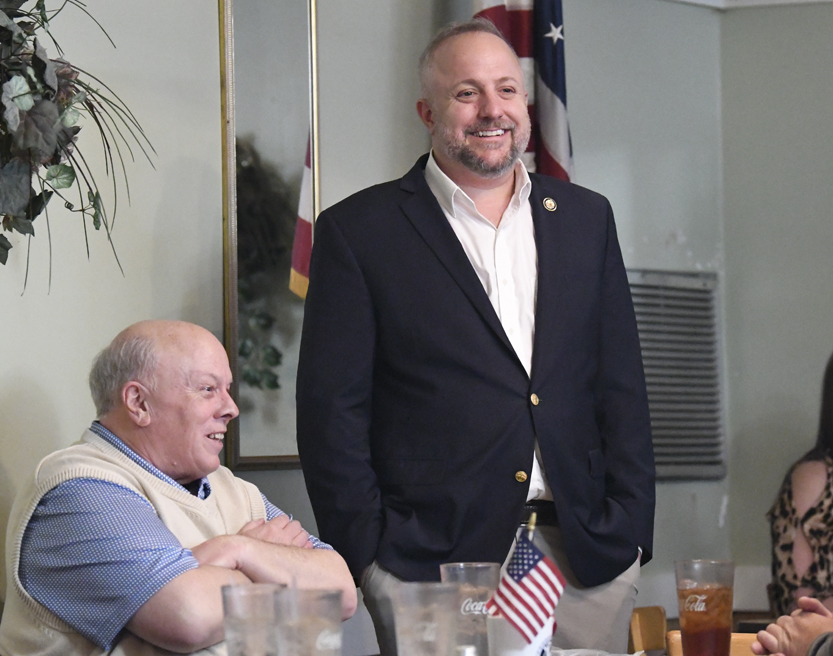
Sandy Logan is one of the featured artists with works on display at the City of Dillon Visitor Center.
Logan was born in 1943 in Charleston, SC, and his family moved to Philadelphia after the war. He attended several New England prep schools and then went to Cornell University in 1961, where he graduated in 1965 as a major in English and Art History. In 1966, Logan went to the University of Pennsylvania to earn my Masters in Architecture, achieving that in 1971. After graduation, Logan went back to my old hometown of Charleston, SC, where he joined a local renovation firm and stayed with them for about 25 years, becoming a partner in 1996. After that, he was pursued by another Charleston firm called LS3P, where he began authoring many large new buildings around the state and in downtown Charleston, including several on the campus of the College Of Charleston. While in Charleston, Logan was placed on the city’s Board Of Architectural Review, where he sat for three 4-year terms, until his family and he, growing tired of the huge amount of uncontrolled new growth and traffic in the downtown area where they lived and he worked, moved to Marion, SC, where they live today.
After practicing architecture here for about four years, he decided to retire from architecture and to avoid becoming very bored, took up painting, which he had never done. So without lessons, he amazed himself and his wife with what he could accomplish and soon had many pieces in a local gallery. He does most of his work from photographs that he has taken, both here and in Charleston.
Here’s a Q&A with Logan to help us get to know a little bit more about him as an artist.
Q. What inspired you to become an artist?
A. As a student of architecture at Penn, in West Philadelphia, I was intrigued by the plethora of old factories and industrial plants there, mostly in states of un-use. I had started doing photography while at Cornell, and so started taking pictures of them, first as whole buildings, and then very close-up to read the details of degradation. The pictures I took and printed those details, the more interested I became in exploring the close-up of everything around me, and thus merging into more abstract pictures. All my paintings are from these photographs, both from Charleston and Marion. I still prefer taking pictures of that degradation of everything around me as well as abandonment and mis-use, which then become subjects for my paintings.
Q. Can you walk us through your creative process from beginning (when it is an idea) to the finished product?
A. It is perhaps one thing to render an object at such close range that it becomes removed from all that defines it, in terms of first, context, and then, purpose. This is the beginning of abstraction, but not the end point. The physical object is merely a stepping zone to an inner world where the object,with the help of the subconscious, drives and focuses perceptions, which then become transmuted into symbols for the emotional content of that object, thus imparting that image with humanity, if not human meaning. It is thus that everything I see becomes personal — otherwise it is dead and mechanical. It is only through the imagination that we can restore life as it was before these more literal times.
Q. How do you know when a piece is finished?
A. When I am satisfied that the piece projects the strong stimulus I felt in the photograph that I was working from. Occasionally, I will modify the painting from the photograph when I feel the first try does not sufficiently convey the way I felt about the image when I first saw it. First sight is the original stimulus, but the process of painting, for me, is sufficiently lengthy enough to occasionally need to occasionally need to modify the characterization of that stimulus.
Q. What mediums/materials or techniques do you find yourself drawn to and why>
A. I started out and mostly stayed with acrylic paint. The stroke for drawing ( which I have done since about 8 years old )is very different from painting. But acrylic allows me to paint in a method closer to drawing than either oil or especially watercolor. My architectural career was spent entirely with hand-drawing, NOT the computer, and so the technique of applying the more precise acrylic medium subscribes more easily to drawing. I have started trying some work in watercolor, but I feel I have a long way to go to achieve some mastery of that medium.
Q. What do you hope viewers in Dillon take away from your work?
A. It is my hope that the people of Dillon will appreciate the different viewpoints seen in a lot of my work on display at the Visitor Center, and temporarily set aside most peoples’ preferences for landscape and bowls of flowers, which I only occasionally will produce.
Q. Do you have any particular piece on display in Dillon with an interesting story behind it? If so, please elaborate.
A. One of my favorite works on display (actually, on a photograph of the original painting in another gallery in Marion) is the image of a beach towel thrown over a dead palmetto tree which stands against a barn door. This is not an abstraction but rather a depiction, but very interesting to me as a combination of intense coloration and neglected items. This dichotomy is what is a key to most of my work. Actually, most of my pieces have interesting stories behind them (perhaps only to me!!), so it is difficult to assign “interesting” to only one.
Q. How does your work reflect your personal experiences or perspectives on things?
A. Because a lot of my work involves ruination, the misused and forgotten, one might think that reflects a rather morose personality for me. Some friends occasionally posit this, but I can assure you that it is not true. The work keeps me very entertained and in good humor.
PHOTO GALLERY