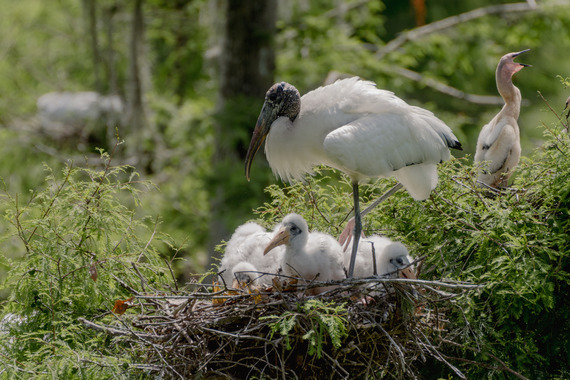
COLUMBIA, S.C. — The U.S. Fish and Wildlife Service announced that the Southeast U.S. distinct population of the Wood Stork will be removed from the Federal List of Endangered and Threatened Wildlife, marking a major conservation milestone for the species. The delisting will take effect March 9, 2026.
Wood storks were originally listed as endangered under the Endangered Species Act in 1984 after researchers documented a dramatic population decline driven largely by altered water flows and the loss or degradation of wetland habitat. By the late 1970s, the U.S. breeding population had fallen to an estimated 4,000 to 5,000 nesting pairs.
Decades of conservation work, habitat restoration, and improved wetland management have helped the species rebound. Today, the Southeast breeding population is estimated at 10,000 to 14,000 nesting pairs, reflecting significant progress toward recovery.
In South Carolina, conservation success has been driven in large part by private landowners and land managers who actively manage wetlands and water levels to support wood stork nesting and foraging habitat. In 2025, 82 percent of wood stork colonies in the state were located on privately owned and managed properties, while 18 percent occurred on public lands.
The South Carolina Department of Natural Resources works closely with landowners to provide technical guidance on habitat management practices that benefit the species.
Wood storks in South Carolina frequently use wetlands where water levels can be managed, including historic rice fields, impounded backwaters, and other managed waterfowl impoundments. These sites allow land managers to carefully control flooding and drawdown cycles that create the shallow foraging conditions wood storks depend on and flooding that protects nesting colonies from terrestrial predators.
Historically, wood storks nested primarily in Florida and used South Carolina wetlands as post-nesting feeding grounds. The first successful nesting attempts in South Carolina were documented in 1981. Since then, SCDNR has monitored colonies through aerial surveys and ground counts, documenting remarkable growth – from just 11 nests in the early years of monitoring to nearly 4,000 nests recorded in 2023.
The recovery of the wood stork in South Carolina highlights the critical role of collaborative conservation efforts between private landowners, public agencies, and habitat managers, as well as the species’ adaptability and the importance of maintaining healthy wetland ecosystems.
Wood Stork Removed from Federal Endangered Species List