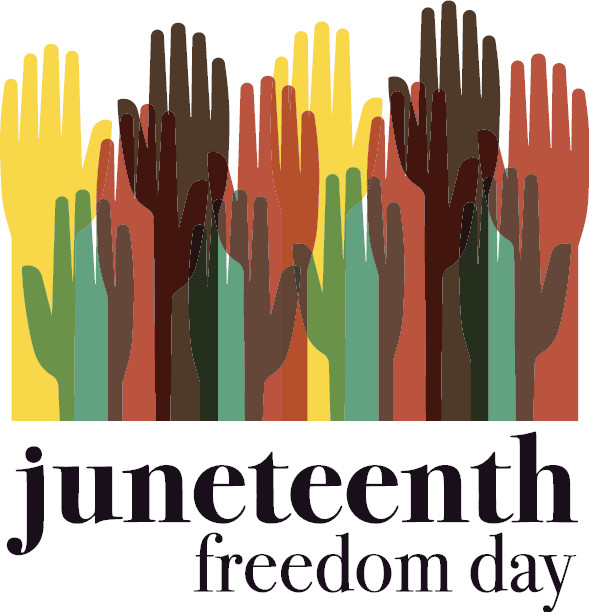
Juneteenth was recognized as a federal holiday on June 17, 2021. Even though it is in its infancy on paper, Juneteenth is considered the longest-running African American holiday in history.
The National Museum of African American History and Culture notes that Juneteenth marks a significant date in American history. June 19, 1865 marks the day when the Union Army arrived in Galveston, Texas, under General Gordon Granger, and announced to the locals that all enslaved African Americans were free. While the Emancipation Proclamation went into effect on January 1, 1863, and the Civil War ended in April 1865, it took time before the end of slavery was actually enforced in resistant states like Texas.
Reactions to freedom ranged from utter joy to pure shock. Some former slaves awaited job offers from plantation owners, but others sought new lives elsewhere, primarily in the northern United States. Settling in new areas brought challenges, but individuals rose to those challenges.
The first of what would become an annual “Jubilee Day” celebration took place in Texas in the year following Granger’s arrival. Through the years, the day took on the name “Juneteenth” (a shortening of June nineteenth) and featured celebrations with prayer services, barbecues, music, and other social activities.
Texas was the first state to make Juneteenth an official holiday, with others following suit in subsequent years. It wasn’t until June 2021 that Congress passed a resolution establishing the celebration of Juneteenth as a national holiday. It was signed into law on June 17, 2021, a mere two days before the first official federal commemoration.
Juneteenth remains a celebration of not only freedom, but also family and the joy surrounding release from oppression. According to Juneteenth.com, special foods and beverages are served for Juneteenth celebrations, particularly those not available or consumed on a daily basis and many that are red in color. Celebrants recall their heritage and culture while looking ahead to future opportunities.
The abolition of slavery in the United States marked the end of a long and winding road. President Abraham Lincoln issued the Emancipation Proclamation on January 1, 1863, a point in time when the American Civil War had already been raging for years. President Lincoln’s proclamation declared that “slaves within any State, or designated part of a State. in rebellion. shall be then, thenceforward, and forever free.” While this was an important step toward enslaved individuals receiving their freedom, the passage of the Thirteenth Amendment after the conclusion of the Civil War in 1865 officially abolished slavery.
Although many people were immediately granted freedom after the Emancipation Proclamation, a large number in various Confederate territories were not. On June 19, 1865, enslaved Africans living in Texas finally received news of their freedom, prompting a celebration and marking the unofficial beginning of Juneteenth. Here are 19 facts related to Juneteenth.
19 Facts About Juneteenth
1. On June 19, 1865, roughly 2,000 Union troops arrived in Galveston Bay, Texas to announce to the more than 250,000 enslaved Black people in the state they were free by executive decree.
2. The newly freed people in Texas came to refer to this day as “Juneteenth.”
3. While Juneteenth has perhaps become the most notable holiday, many other celebrations commemorate the end of slavery. Many individual states commemorate their own emancipation days.
4. General Gordon Granger arrived with the Union troops to enforce the end of slavery in Texas. Granger commanded the Headquarters District of Texas.
5. On June 19, 1866, freedmen in Texas organized the first annual celebration, which they called “Jubilee Day.”
6. Juneteenth celebrations often feature music, prayer services, fun activities, and barbecues. When Black people migrated to other states, they brought their celebratory traditions with them.
7. Texas made Juneteenth an official holiday in 1979. Additional states, and eventually the Federal government, followed the lead throughout the years.
8. The United States Congress passed a resolution establishing Juneteenth as a federal holiday and President Joseph Biden signed the bill on June 17, 2021. The first commemoration occurred two days later.
9. Juneteenth is the first day to obtain legal observance as a federal holiday since Martin Luther King, Jr. Day was designated in 1983.
10. Juneteenth goes by other names, including Emancipation Day, Black Independence Day and Freedom Day.
11. There is an official Juneteenth flag. It features blue over red and a white central star, surrounded by an outer star. The red, white and blue is a nod to the formerly enslaved people being recognized as Americans. The inner star represents Texas, and the outer star symbolizes new freedom and new people.
12. Red foods and beverages are staples of Juneteenth festivities because they are said to represent the bloodshed by ancestors.
13. Juneteenth is the longest-running African American holiday.
14. Part of the General Order No. 3 that freed Texas slaves encouraged the newly emancipated people to remain with their past owners and work for wages. Despite this recommendation, many Black people left the area in a period known as “the scatter.”
15. Emancipation Park in Houston was bought by former slaves. The 10-acre parcel was purchased specifically to celebrate Juneteenth.
16. Although Juneteenth celebrations waned during the early twentieth century, they were revived during the Civil Rights Movement.
17. The official title for the federal holiday of Juneteenth is Juneteenth National Independence Day.
18. Each year, a Juneteenth Flag-raising ceremony is held in Galveston.
19. Estimates suggest there were 3,953,760 enslaved people in the United States in 1860, according to the National Bureau of Economic Research.