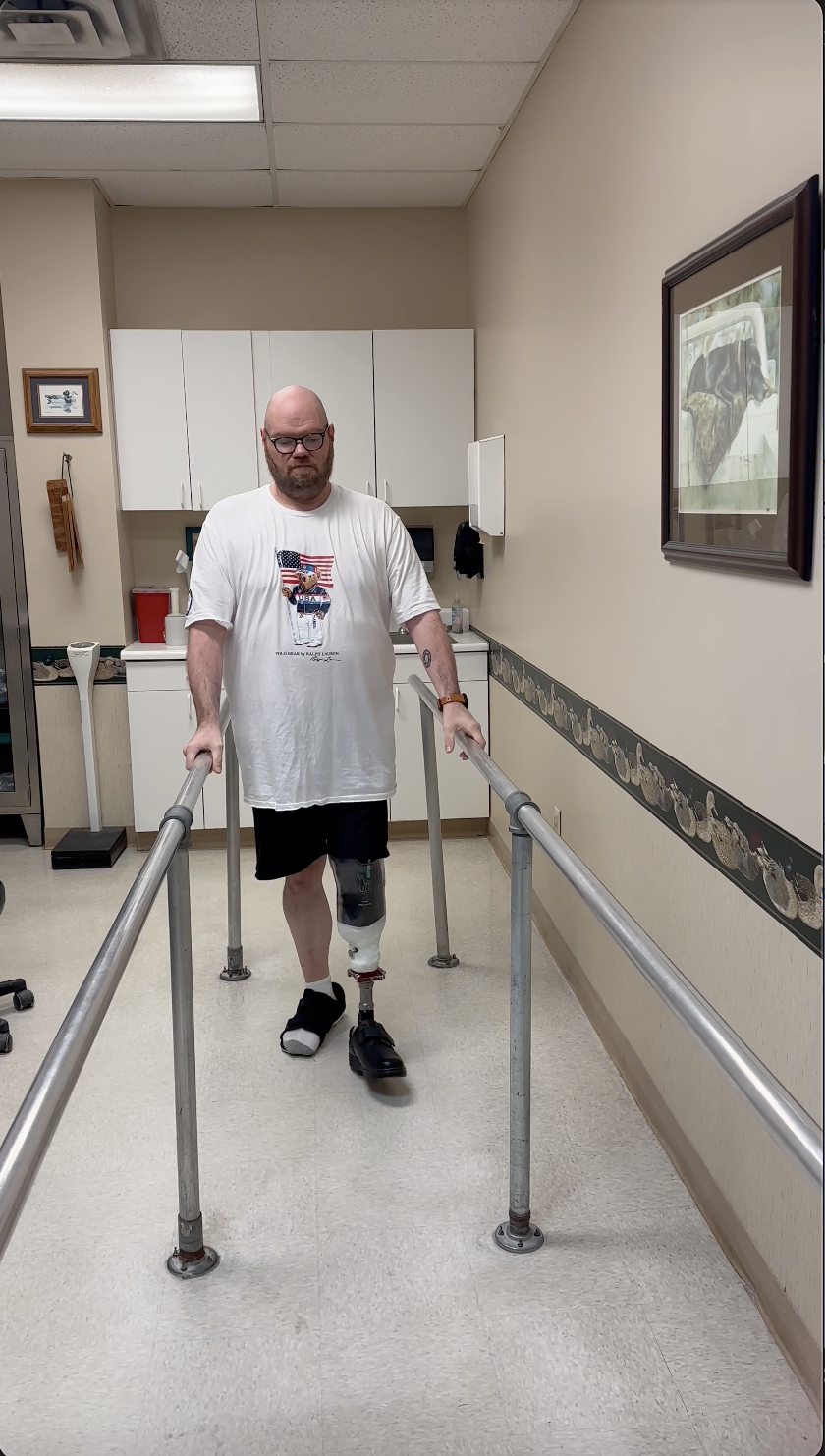
When Ronnie Stafford was told he had a severe infection in his left foot, the outlook was grim. The doctors at McLeod Hospital in Florence, laid out the options: stay in the hospital for two months with only a 20% chance of saving the leg or move forward with an amputation and be mobile again within weeks.
“I had too much going on,” Stafford said. “For a 20% chance, I didn’t want to take a month in the hospital and then still have to have the amputation.” In July 2024, he made the call. He chose to lose the leg.
But what could have been a life-altering setback became something Stafford calls “a small medical procedure.” It’s the kind of perspective that defines him. “I knew I had two choices. I could treat it like it’s really nothing and keep going or I could dwell on it and let it ruin my life,” he said. “I wasn’t going to let that happen.”
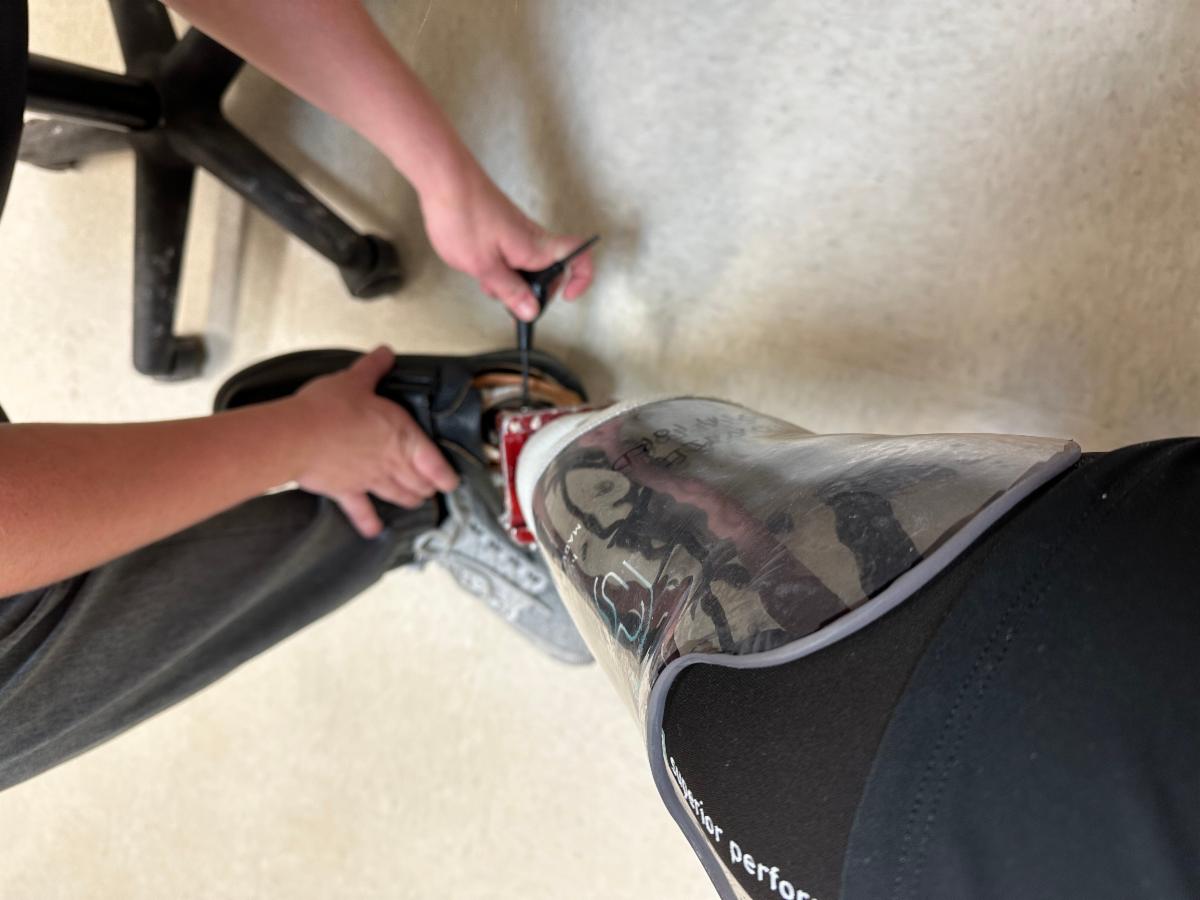
In fact, while recovering, Stafford didn’t slow down. He continued working from home and kept up with his doctoral coursework. “I’ll tell you this,” he said with a smile, “getting a doctorate is more painful than an amputation.”
Stafford received not only medical care during his recovery but emotional support from the very community he serves.
One of the most significant sources of that support came from Mike Thomas, a colleague whose office sits right behind Stafford’s. “Mike took me to a doctor’s appointment, checked in on me. We’re like family here,” he said.
And then there was Natalie, his home health nurse. A 2000 graduate of NETC’s nursing program, Natalie brought more than her skills to Stafford’s recovery. “She had a great personality, a bubbly spirit. She made a huge impact on my recovery. Even now, she sends me text messages saying things like, ‘You’ve got this.’”
Stafford remembers her fondly and still relies on her guidance. “If I get a bump on my leg, I’ll text her a photo and she’ll tell me what to do,” he said. “She was one of the best nurses I’ve ever had.”
His story doesn’t stop with Natalie. A CNA who had completed training through NETC was also assigned to his care while he was in the hospital in Dillon. “That’s why I always say be nice to nursing students. You never know when you’ll need them,” Stafford joked.
The experience reminded him of the power of local education and the value of NETC’s mission. “It makes me feel good about our community and what we’re doing here. We’re not just training nurses. We’re training good people,” he said. “If they’re all like Natalie or even half as good, I know we’re in good hands.”
For Stafford, his support system extended beyond the medical professionals. He credits coworkers like Angelia Nivens, Kat Meyers, Marlowe Harrington, Lisa Johnson, Jessica Howington and Derk Rodgers with helping him through the tough days. “Dirk and I are like brothers,” he said. “He was always checking on me, calling me. That Northeastern support group was really good to get me through this and they’re still doing it.”
When asked what advice he’d offer someone facing a major medical challenge, Stafford was clear. “You have to approach it from the head, not the heart. You need the mindset that this isn’t going to stop you. Surround yourself with good people who care about you and will push you when you want to stop. And never give up.”
To NETC’s nursing students, many of whom say they entered the program to make a difference in just one person’s life, Stafford offers this: “Be vulnerable with your patients. Show them that you’re not just a healthcare provider but a person they can trust. Have a good bedside manner and be a caring, compassionate person. That’s what makes the biggest difference.”
And to Natalie, Stafford summed it up simply: “I’m glad you’re a nurse because that’s what you were born to be.”
More Than a Procedure: How One Educator Faced Amputation With Grit, Grace, and Community