By Betsy Finklea
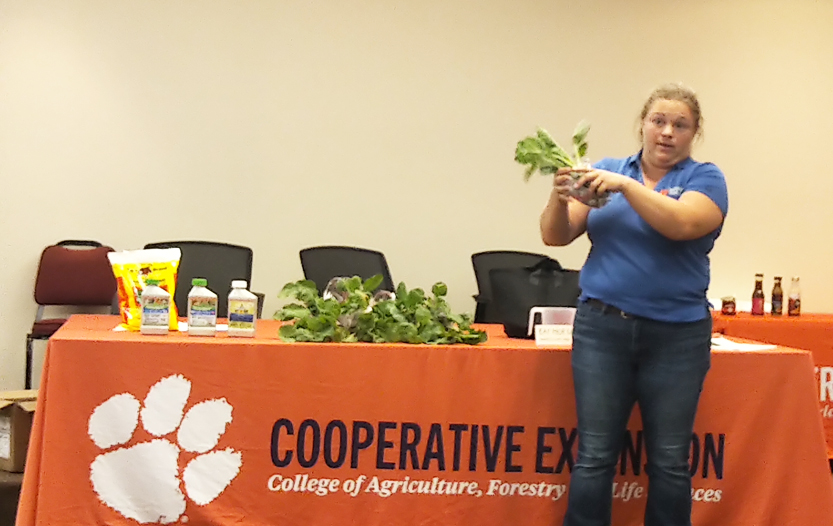
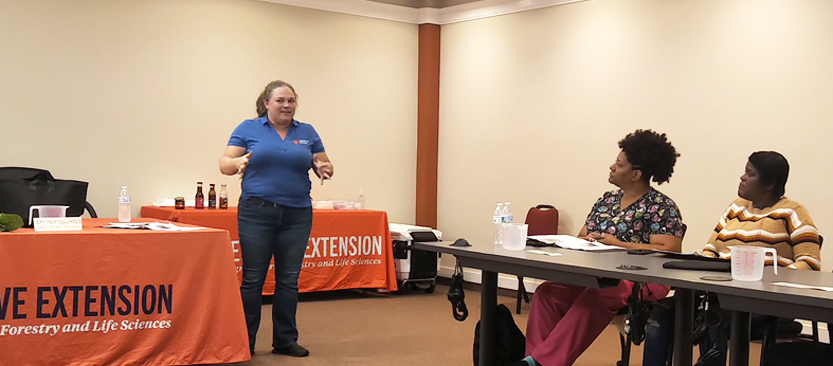
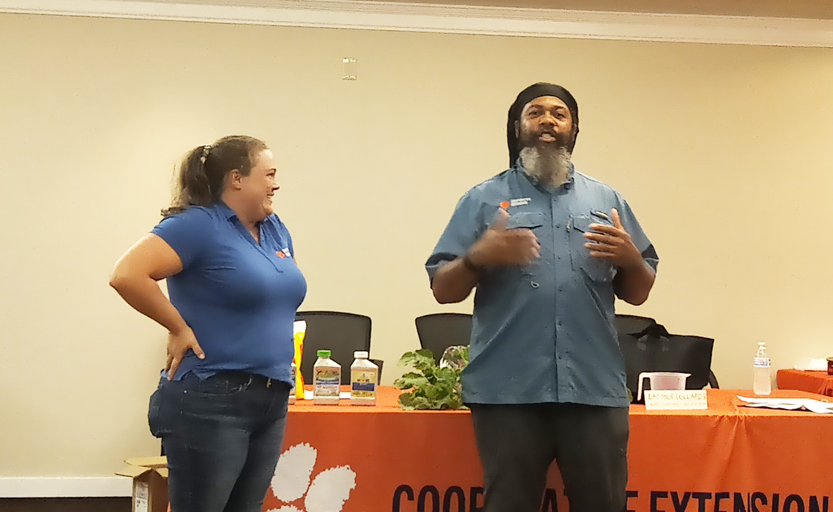
The Dillon County Clemson Extension Growing Health series continued recently with a class on growing collards led by Carmen Ketron and Justin Foxworth.
“The best is yet to come,” said Ketron as she began to give the group the tips and tricks to growing great collards. “Fall is a different type of beast,” said Ketron, who said it’s easier to grow fall vegetables such as greens whether it’s collards, spinach, kale, turnip greens, etc. She said it is a very simple process of set and forget.
Collards can be grown in the ground or in container raised beds using potting mix. Those who choose to grow in the ground should get a soil sample test before planting.
She said all that greens need is nitrogen. She said to add one teaspoon of 20.0.0 nitrogen to a gallon of water and do this every week. Adding nitrogen is the key to growing big greens. Collards are 45-day plants and spinach are 30-day plants. Greens like occasional cold.
There are two types of munching insects to be on the lookout for—caterpillars and potato beetles. Army worms love collard greens and Bermuda Grass. Aphids love over-fertilized plants.
Ketron said it’s hard to prevent pests without a pre-plan. She said to go ahead and put down chemicals so when the pests go there to eat, it kills them.
Greens can also easily get fungal infections. Snap the bottom leaves when they get to be eating size to get more leaves.
Remove the diseased leaves, but avoid dropping them on the ground.
Foxworth
Grow collards with marigolds, snapdragons, calendula, and delphinium.
Foxworth talked about healthy eating and exercise. He suggests 150 minutes of exercise per week, but said to consult with your health professional before starting any new exercise programs. He said being active in the garden can be a form of exercise.
Foxworth said half of your plate should be fruits and vegetables. Men should get 3-4 cups of cooked vegetables, and women should get 2.5-3 cups of cooked vegetables daily. Cooked vegetables equals one cup; uncooked needs to be doubled.
Greens are a source of Vitamin A, B6, Vitamin C, calcium, magnesium, and iron.
Foxworth said to read everything on food labels as they can empower you with knowledge of calories, sugar intake, sodium intake, etc.
As far as greens storage is concerned, place them in a sealed bag as they will last a great deal longer when stored this way.
Gardening can help you stay active and help with stress. He said as the days get shorter think of ways you can stay active in the coming months. He said to start now with a plan to be active when the days get shorter. He said by practicing moderation and making small changes in your life, you can be successful.
After hearing from Foxworth, everyone enjoyed collard egg rolls that he had prepared for the group. He also provided recipes on French Spinach Frittatas, Broccoli and Spinach Salad with Blueberries, and Mozzarella Chicken with Garden Spinach.
PHOTO GALLERY
PHOTOS BY BETSY FINKLEA/THE DILLON COUNTY NEWS, LLC