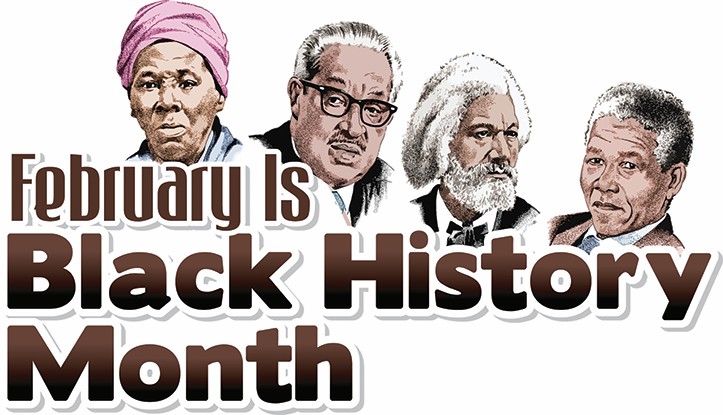
Each February, the United States commemorates the impressive contributions of Black individuals. Black History Month has a lengthy history that dates back more than a century. According to History.com, historian Carter G. Woodson and minister Jesse E. Moorland founded the Association for the Study of Negro Life and History (ASNLH) in September 1915. Promoting the achievements of Black Americans was among the various missions of the ASNLH. One of the ways the ASNLH sought to achieve that mission was through the establishment of Negro History Week in 1926. Organizers chose the second week of February for the event because that week happened to be when Abraham Lincoln (1809) and Frederick Douglass (1818) were born. Lincoln and Douglass played pivotal roles in the abolition of slavery in the United States. After the establishment of Negro History Week in 1926, more and more cities began to celebrate it. History.com notes that by the 1960s Negro History Week had evolved into Black History Month on college campuses, eventually leading to formal recognition of the event by American president Gerald Ford in 1976.
Black History Month is loaded with opportunities to learn more about influential Black individuals. Local libraries, television channels and schools often focus on such individuals throughout the month of February, providing ample chances for individuals from all walks of life to learn more about people and events that have shaped the nation.
· Watch documentaries. During Black History Month, many networks feature documentaries on influential figures who made their marks in the Black community and beyond. Streaming services also may have documentaries or special interview series available that highlight certain Black figures.
· Watch movies. Curate a collection of films that were directed by Black directors or feature Black actors in lead roles. Films that chronicle the biographies of Black historical figures also can be educational.
· Learn about local Black history. There may be specific Black individuals in your local community who are notable for their accomplishments or efforts. In addition, many people might be surprised to learn about events in their own communities that helped to shape Black history.
· Read MLK Jr’s famous letter. People can revisit the words of Martin Luther King, Jr. by reading his “Letter From Birmingham Jail.” The letter is considered vital for anyone hoping to understand the Civil Rights movement in the United States.
Black History Month provides plenty of chances to learn about influential figures and historical events.
Black History Month Commemorates Impressive Contributions of Black Individuals