By Jeff Dennis
Assistant Director of Public Information
SCDNR
Did you know the Christmas Bird Count (CBC) is the longest-running community science project in the world? Sponsored by the National Audubon Society, this beloved birding tradition has been going strong since 1900. Each year, birders across the country take part during a designated window – from December 14 through January 5 – collecting valuable data that helps scientists track bird populations over time.
On December 18, the 10th annual Winyah Bay Christmas Bird Count took place across public and private lands, with SCDNR Tom Yawkey Wildlife Center Manager Jamie Dozier serving as the primary count organizer.
The day began early for SCDNR staff and volunteers, who met at 7 a.m. at the Yawkey Center boat ramp for a short ferry ride to Cat Island. From there, teams fanned out across the property, each with a designated leader and scribe. Every bird species encountered – and every individual bird seen – was carefully recorded and turned in at the end of the day.
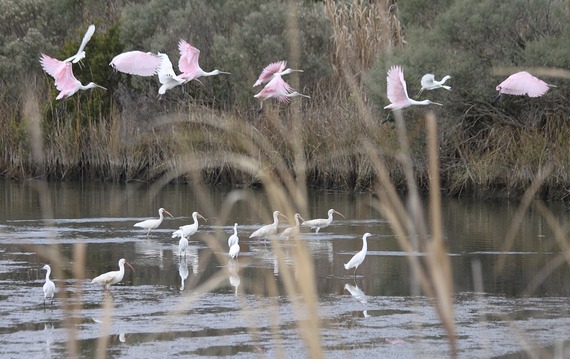
The results were impressive: thousands of migratory waterfowl, hundreds of white pelicans, and a wide variety of wading birds and shorebirds were counted. One especially exciting find was an American oystercatcher with green leg bands, indicating it had been tagged in North Carolina – a great example of how CBC data supports broader research efforts like those of the American Oystercatcher Working Group.
The Christmas Bird Count has meaningful roots. It began as a conservation-minded alternative to a once-common Christmas Day tradition of hunting wild birds. Fittingly, Tom Yawkey, a self-taught ornithologist with a strong conservation ethic, ensured the Yawkey Wildlife Center would be managed for wildlife without hunting pressure – making it an ideal place to continue this century-old tradition.
Each year, the data collected through the CBC helps researchers and biologists at state and federal agencies monitor the health of bird populations and ecosystems nationwide.